

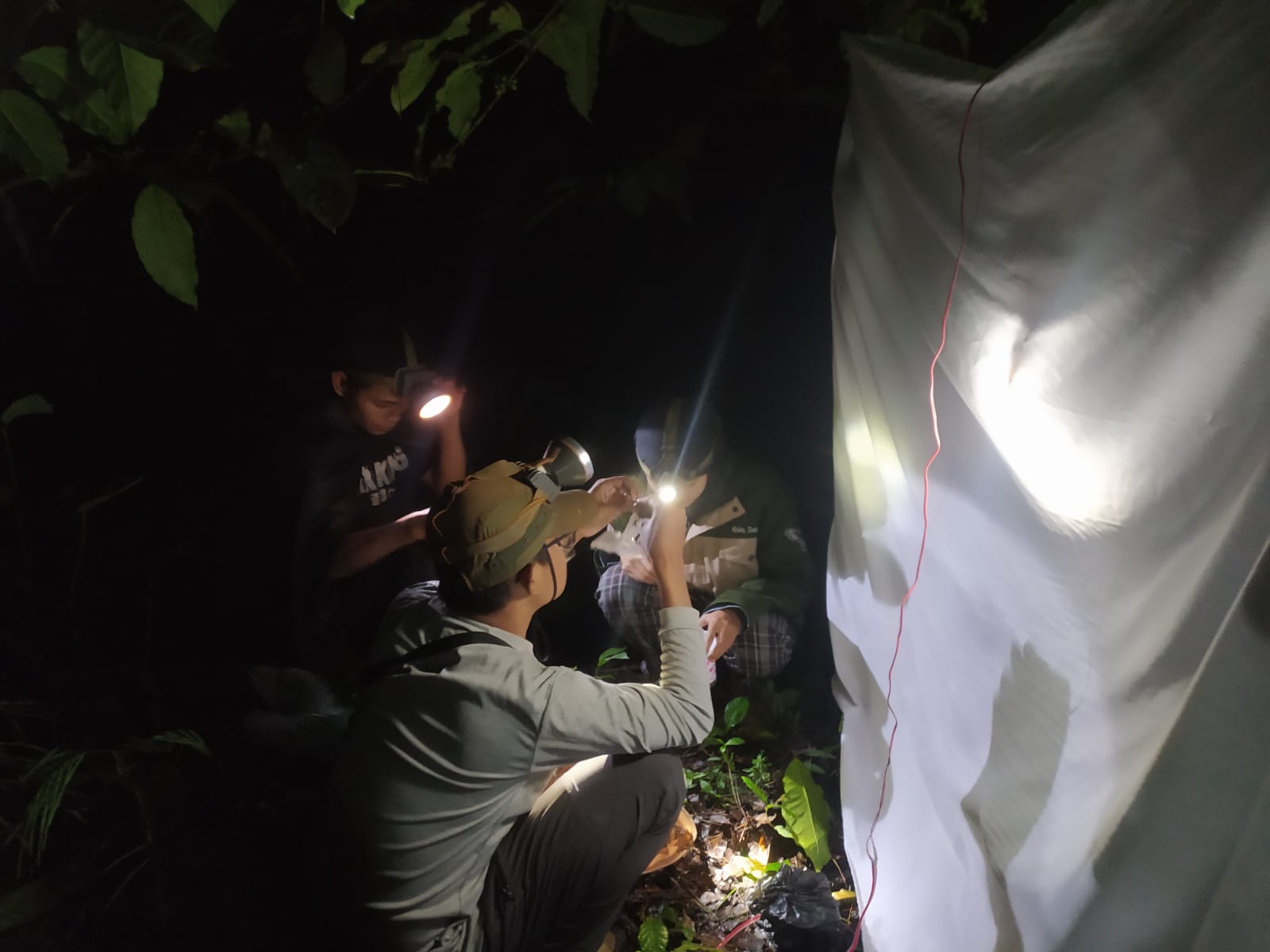

The Sumberjati Forest area within BKPH Sempolan, KPH Jember, holds a nighttime ecosystem that is just as fascinating as its daytime environment. Through research conducted by KERISDIMAS BIO-CON, the area was revealed to be an important habitat for various species of nocturnal moths belonging to the superfamily Geometroidea.
Moths, often referred to as “night butterflies,” play important ecological roles within forest ecosystems, particularly as pollinators and as components of the food chain. Their activity, which begins at dusk and continues until dawn, makes the forest a dynamic living space even in darkness.
In this study, the research team used the light trap method, a technique that captures insects using artificial light at night. The results documented several moth species, indicating that the Sumberjati forest ecosystem still provides suitable conditions for supporting nocturnal insect life.
🦋 Recorded Species
- Hypomecis sp. 1
- Xerodes sp.
- Peribatodes sp.
- Comostola meritaria
- Hypomecis sp. 2
💡 Fun Fact: Moths from the Geometroidea group are commonly known as “inchworm moths” during their larval stage because of the distinctive way their caterpillars move, resembling the act of measuring their own body length. In addition, many species possess colors and patterns that closely resemble leaves or twigs, allowing them to camouflage extremely well from predators.
These findings demonstrate that nighttime forest life is equally important to conserve. Moth diversity serves as an indicator that the ecosystem remains stable and continues to provide sufficient resources for a wide range of organisms.