
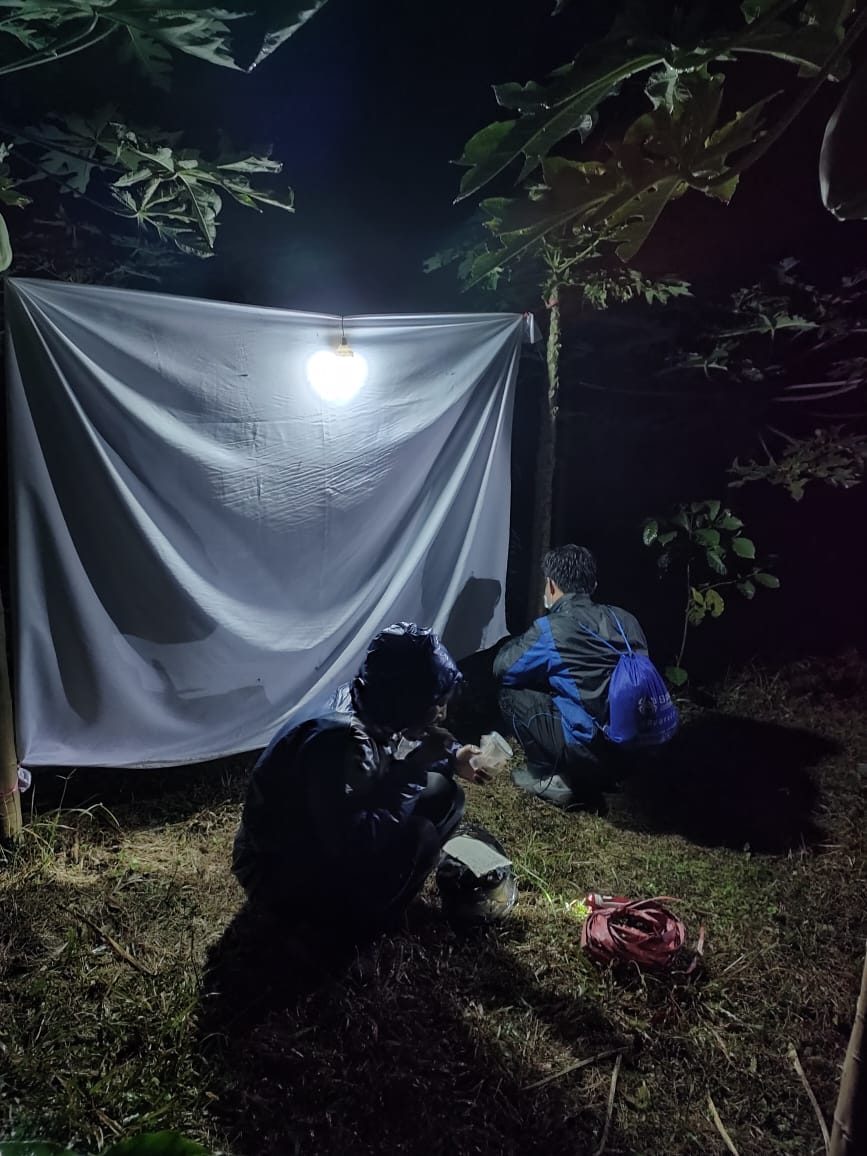

The Ranu Darungan Resort area within Bromo Tengger Semeru National Park holds an extraordinary nocturnal ecosystem. Research conducted in 2024 revealed that this area serves as an important habitat for various moth species from the Geometroidea group along with their host plants.
Moths are nocturnal insects that become active from dusk until dawn. Although often less popular than butterflies, moths play crucial ecological roles, particularly as nighttime pollinators and as part of natural food chains.
The study also demonstrated that moth presence is strongly influenced by the availability of host plants. The more diverse the vegetation within an area, the greater the opportunity for different moth species to survive.
Recorded Moth Species:
- Acropteris illiturata
- Asota heliconia
- Creatonotos sp.
- Nudaria sp.
- Duponchelia sp.
- Eacles sp.
- Xanthorhoe sp.
- Plodia sp.
- Polythlipta macralis
- Conogethes punctiferalis
The research successfully documented dozens of plant species that potentially function as host plants for moths. This indicates that the ecological relationship between insects and vegetation in Ranu Darungan is still functioning naturally and mutually supporting biodiversity.
However, the study also identified the presence of invasive plant species such as Ageratina riparia, which is capable of spreading rapidly and potentially dominating habitats. If left uncontrolled, invasive plants may reduce native vegetation diversity and affect the survival of local insect communities.
The diversity of moths in Ranu Darungan demonstrates that nocturnal life within conservation areas remains highly active and ecologically important. From host plants to their ecological interactions, moths represent small yet essential components in maintaining the balance of montane forest ecosystems.