
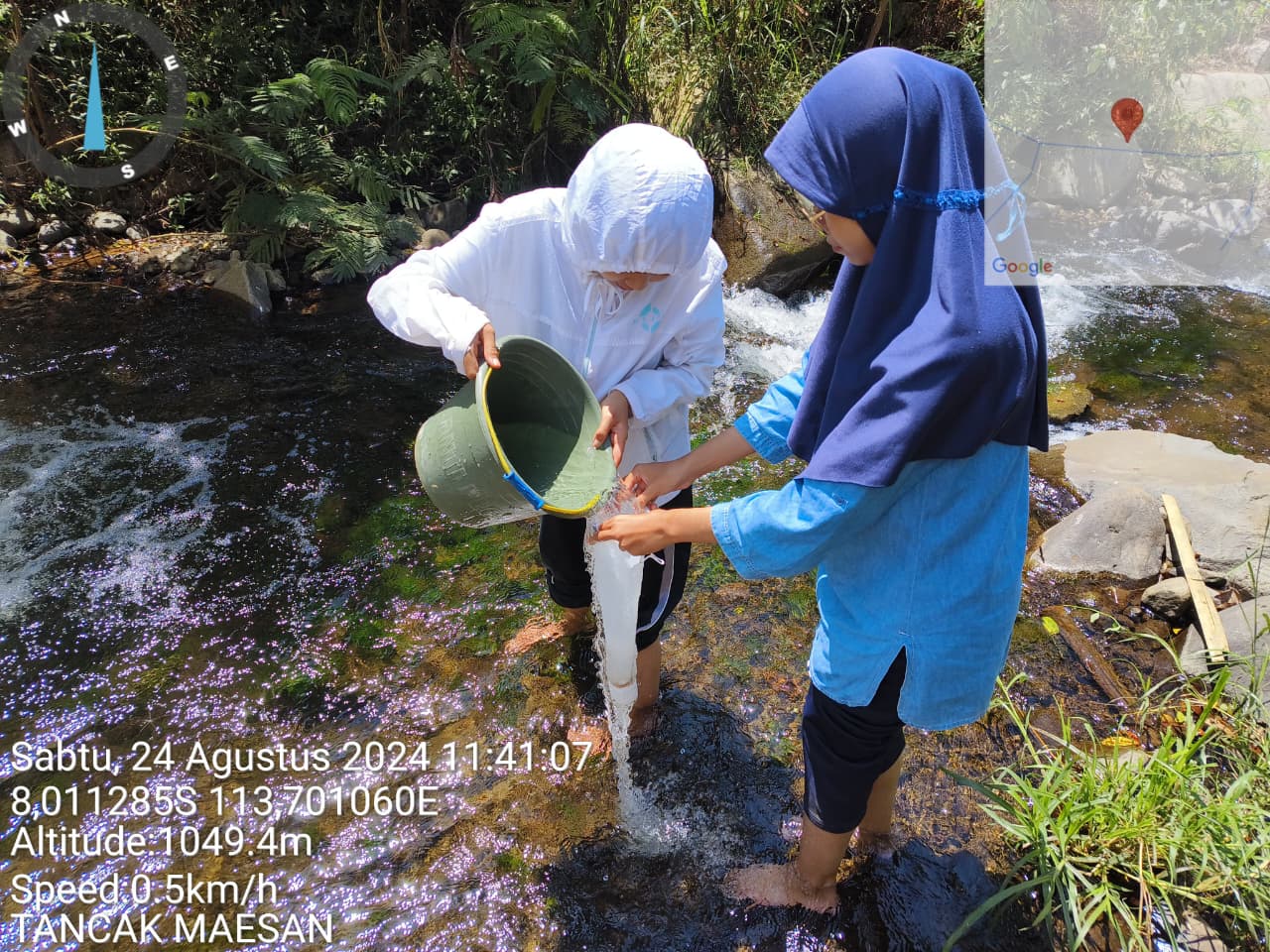

Beneath the flowing waters of the Tancak Maesan River in Bondowoso lies a hidden microscopic world that plays an essential role in maintaining aquatic ecosystem balance. Research conducted by KERISDIMAS BIO-CON in 2025 revealed the diversity of microalgae inhabiting this river ecosystem.
Microalgae are microscopic photosynthetic organisms that function as primary producers in aquatic environments. Although invisible to the naked eye, they provide the foundation of the aquatic food chain and serve as an important energy source for many other organisms living in freshwater ecosystems.
Through this study, researchers documented various microalgal species belonging to several major groups, including Ochrophyta, Charophyta, and Chlorophyta. Each species was found under different environmental conditions influenced by factors such as light intensity, water quality, and human activities surrounding the river.
Interestingly, some microalgal species are highly sensitive to environmental changes. Because of this, microalgae are widely recognized as natural bioindicators used to assess water quality and ecosystem health. Even small environmental disturbances can affect the composition and presence of microalgal communities within aquatic habitats.
💡 Interesting Insight:
Microalgae contribute significantly to oxygen production in aquatic ecosystems and play an important role in global oxygen generation through photosynthesis. Despite their microscopic size, these organisms are fundamental to maintaining ecosystem stability and supporting aquatic food webs.
The findings also indicate that the Tancak Maesan River still supports diverse microscopic life essential for ecological balance. However, environmental pressures and human activities around the river should continue to be monitored to ensure the sustainability of water quality and aquatic biodiversity.
This research provides important baseline information on local microalgal diversity while highlighting the importance of conserving river ecosystems as habitats for both visible and microscopic forms of life.