
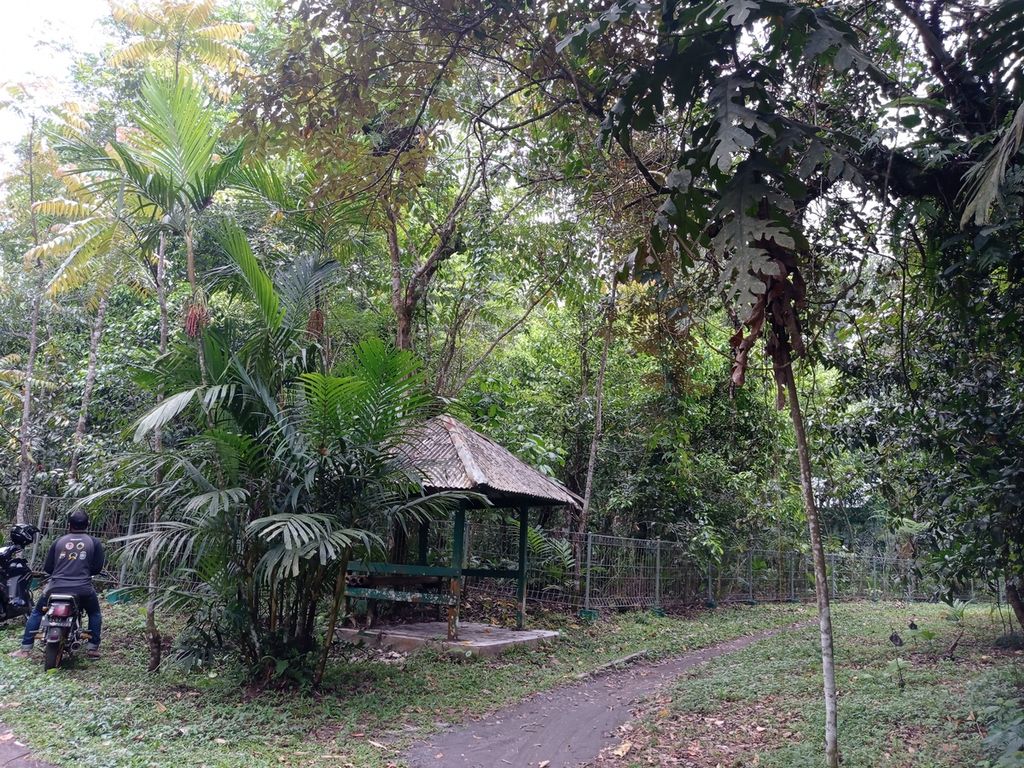

Following the 2021 eruption of Mount Semeru, the Ranu Darungan Resort area within Bromo Tengger Semeru National Park has gradually shown signs of ecological recovery. One of the clearest indicators comes from dragonflies (Odonata), insects well known for their sensitivity to environmental changes and water quality.
Research conducted in 2024 successfully documented a variety of dragonfly species that continue to survive in the area. Their presence indicates that aquatic habitats and surrounding vegetation in Ranu Darungan still provide suitable conditions for supporting various Odonata species, both in open areas and along shaded, humid streams.
Dragonflies from the family Libellulidae were the most frequently encountered, especially in open areas exposed to sunlight. Meanwhile, several other species were more commonly found around rivers with dense vegetation and clear water.
Recorded Dragonfly Species:
- Neurothemis ramburii
- Orthetrum glaucum
- Orthetrum pruinosum
- Orthetrum sabina
- Orthetrum testaceum
- Trithemis festiva
- Tholymis tillarga
- Paragomphus reinwardtii
- Anax guttatus
- Vestalis luctuosa
- Ischnura aurora
- Ischnura senegalensis
- Pseudagrion pruinosum
- Coeliccia membranipes
- Copera marginipes
- Euphaea variegata
- Heliocypha fenestrata
Interesting Insight
Dragonflies are natural bioindicators of environmental quality. The presence of certain species, particularly those inhabiting clean and shaded rivers, indicates that aquatic ecosystems in Ranu Darungan remain relatively healthy despite the area previously being affected by volcanic eruption.
Several species such as Vestalis luctuosa and Euphaea variegata are known to strongly prefer clear streams with high humidity levels. This suggests that microhabitats within the area remain well preserved.
Spotlight on Endemic Javan Species
The research also recorded two dragonfly species endemic to Java Island:
🟢 Paragomphus reinwardtii
🟢 Heliocypha fenestrata
Both species possess relatively specific habitat requirements and are generally associated with forested areas containing natural stream systems.
💡 Fun Fact:
Heliocypha fenestrata is known for its striking metallic coloration that becomes highly visible under sunlight. Meanwhile, Paragomphus reinwardtii is often observed perching on rocks near streams and is highly sensitive to habitat quality changes.
The presence of these two endemic species serves as an important indicator that the Ranu Darungan ecosystem still maintains environmental conditions capable of supporting specialist fauna.
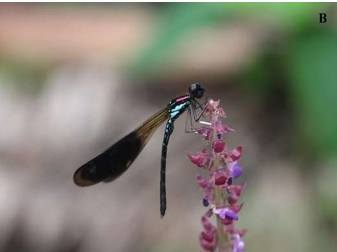
Heliocypha fenestrata
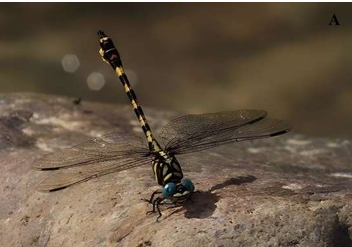
Paragomphus reinwardtii