
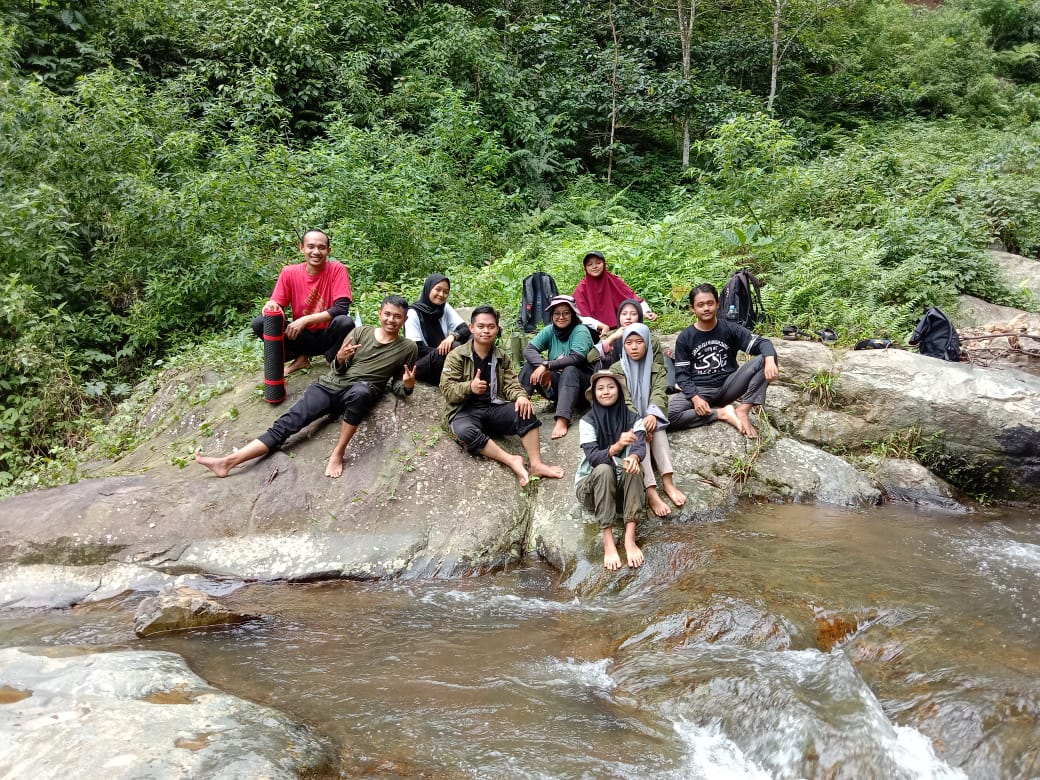

Research conducted by KERISDIMAS BIO-CON in the Garahan Resort area, Sempolan region (Perhutani Forest Management Unit of Jember), revealed that this forest still serves as a suitable habitat for various dragonfly species (Odonata). Through exploration across two habitat types—pine forest and natural forest—the research team successfully documented 13 dragonfly species from different groups.
This diversity indicates that the Garahan area maintains relatively stable environmental conditions, particularly in supporting the dragonfly life cycle, which is highly dependent on water quality and microhabitat conditions. In both pine forests and natural forests, dragonflies were actively found around water sources, open areas, and more shaded forest sections.
Interestingly, each habitat type contributed different characteristics to the dragonfly community. Natural forests tended to provide more complex environmental conditions, while pine forests were still capable of supporting several species adapted to more open habitats.
Endemic Javan Dragonflies: Indicators of High-Quality Habitat
One of the important findings of this study was the presence of dragonfly species endemic to Java, namely Paragomphus reinwardtii and Heliocypha fenestrata. Both species possess relatively specific habitat preferences and are sensitive to environmental changes.
Paragomphus reinwardtii was generally observed perching on rocks near streams with moderate water flow, indicating the importance of maintaining relatively natural river conditions. Meanwhile, Heliocypha fenestrata was more commonly found in vegetated shaded areas, perching on leaves or branches around clear-flowing streams.
The presence of these two species serves as a strong indicator that habitat quality in the Garahan area remains relatively good, as endemic dragonflies generally have low tolerance to environmental disturbances.
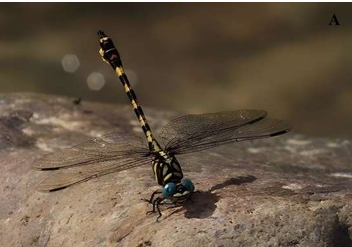
Paragomphus reinwardtii
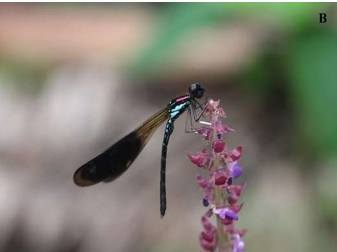
Heliocypha fenestrata
💡 Interesting Insight: Dragonflies are not only visually attractive insects, but they also play important ecological roles as natural controllers of insect populations and indicators of environmental health. If dragonfly communities remain diverse and active, it generally indicates that surrounding aquatic ecosystems are still capable of supporting life.
These findings demonstrate that the Garahan forest area possesses important ecological value in supporting dragonfly diversity, including endemic species. Therefore, maintaining habitat quality—particularly water sources and surrounding vegetation—becomes essential for preserving ecosystem balance within the area.