
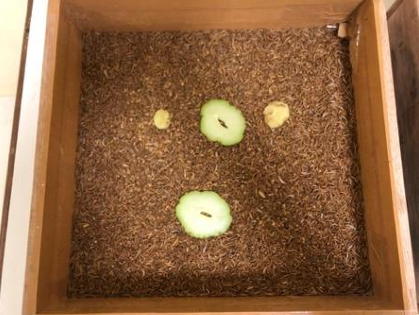

Research conducted by KERISDIMAS BIO-CON in 2023 revealed an intriguing fact about the potential role of insects in helping address plastic waste pollution. The study focused on the mealworm beetle (Tenebrio molitor) across all stages of its life cycle—larva, prepupa, pupa, and adult (imago).
The results showed that the larval stage had the highest capability for degrading polypropylene (PP) plastic. During this stage, the larvae were able to break down a significantly greater amount of plastic compared to the other developmental stages. This occurs because larvae are in an active growth phase that requires high energy intake, including from unusual materials such as plastic.
In addition, the plastic digestion process was found to be most effective during the larval stage. Plastic fragments of various sizes were detected within digestive organs such as the crop, ventriculus, intestines, and rectum, indicating that the plastic was not only consumed but also underwent breakdown processes inside the body.
In contrast, during the pupal stage, the ability to degrade plastic tended to decrease due to lower metabolic activity. The adult (imago) stage showed an increase again, although it still did not reach the degradation capacity observed during the larval stage.
💡 Interesting Insight: The larvae of Tenebrio molitor, commonly known as mealworms, possess microorganisms within their digestive systems that are suspected to play a role in breaking down plastic materials. This unique characteristic has attracted scientific interest in using these insects as potential biological agents for plastic waste bioconversion in the future.
These findings open new opportunities for biologically based plastic waste management strategies. Although further studies are still required, the results demonstrate that nature possesses unique mechanisms that may potentially be utilized to reduce environmental pollution.