
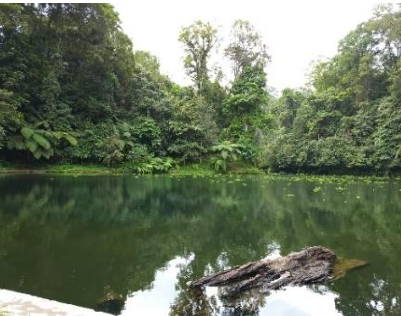

Beneath the lush forests of Ranu Darungan, within Bromo Tengger Semeru National Park, lives a small community that works tirelessly to maintain the balance of nature: ants. Although tiny in size, their presence plays a major role in forest ecosystems.
Research conducted in the Ranu Darungan area recorded various ant species from different subfamilies inhabiting the forest floor, leaf litter, tree trunks, and humid areas near water streams.
🐜 Some ant species recorded during the study include:
- Diacamma sp.
- Odontoponera sp. 1
- Leptogenys sp.
- Odontoponera sp. 2
- Myrmicaria brunnea
- Myrmicaria sp.
- Pheidole harrisonfordi
- Strumigenys gundlachi
- Lepisiota sp.
- Oecophylla sp.
- Camponotus sp.
- Polyrhachis sp.
- Euprenolepis sp.
- Anoplolepis sp.
- Dolichoderus sp.
✨ Fun fact: Ants are among the most successful insect groups on Earth. Within a single forest area, they can form complex colony networks and function as predators, decomposers, soil engineers, and even seed dispersers.
One particularly interesting species recorded was Myrmicaria brunnea. This ant was commonly found in humid areas near streams and beneath the shade of Ficus trees. The species is known as an active predator that helps control populations of small organisms within forest ecosystems.
Another unique species was Euprenolepis sp., which has ecological associations with fungi on the forest floor. This ant was frequently encountered in shaded areas with thick leaf litter, highlighting the importance of natural microhabitats for sustaining ant communities.
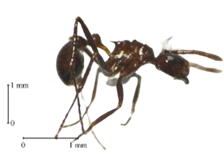
Myrmicaria brunnea
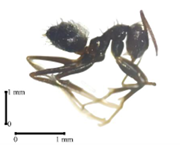
Euprenolepis sp.
The presence of ants was strongly influenced by vegetation structure and environmental conditions. Forests with high humidity, abundant leaf litter, and minimal human disturbance were able to support more stable and diverse ant communities.
Interestingly, the Ranu Darungan area, which had previously been affected by the eruption of Mount Semeru, still supports various ant species. This demonstrates that ants can serve as natural bioindicators for observing ecosystem recovery processes following environmental disturbances.
Sometimes, the smallest creatures become the most important foundation for sustaining forest life.