

The Biodiversity Conservation Research and Community Service Group (KERISDIMAS) BIO-CON carried out a community service program titled “Birdwatching for Kids: Introduction and Efforts to Enhance Conservation Awareness in Forest Compartment 56, Sumberjati, Jember.” This program served as an educational initiative to introduce the importance of bird and forest conservation to younger generations from an early age.
Forest Compartment 56, located on the southwestern slopes of Mount Raung, is well known for its rich biodiversity, including various endemic and migratory bird species. However, the area also faces several challenges, such as low conservation awareness, limited access to environmental education, and minimal involvement of younger generations in nature conservation efforts.
The activity began with an interactive classroom session using engaging visual media such as slides, pictures, and bird illustrations. The students were introduced to:
- The diversity of bird species
- Different beak shapes and their relationship to feeding habits
- Bird habitats and behaviors
- Basic birdwatching techniques
The learning atmosphere was designed to be active and engaging through question-and-answer sessions and simple discussions that encouraged students’ curiosity about birds and their surrounding environment.
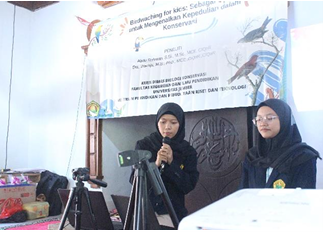
Presentation of Material
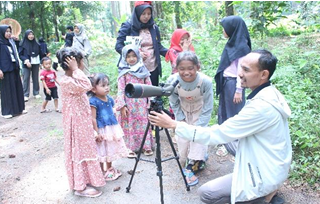
After the classroom session, the participants were invited to conduct direct birdwatching activities in the Forest Compartment 56 area under the guidance of Biology Education students from the University of Jember. The children learned how to use binoculars, identify bird calls, observe bird behavior, and understand the relationship between birds and their habitats.
This hands-on learning experience in nature provided a unique impression, as the students not only observed pictures in the classroom but also directly witnessed bird life in its natural habitat.
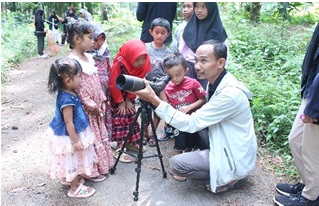
Direct Bird Observation in Nature
Through a reflective discussion session after the observation activities, participants were encouraged to understand that birds are important indicators of environmental health. When forests are damaged, bird populations are also at risk.
The children were also encouraged to build simple environmental commitments through eco-awareness actions, such as:
- Not capturing wild birds
- Protecting natural habitats
- Planting trees
- Avoiding littering
This program is expected to become an initial step toward creating a younger generation that is more environmentally conscious while also supporting the development of conservation-based ecotourism potential in the Forest Compartment 56 area.