
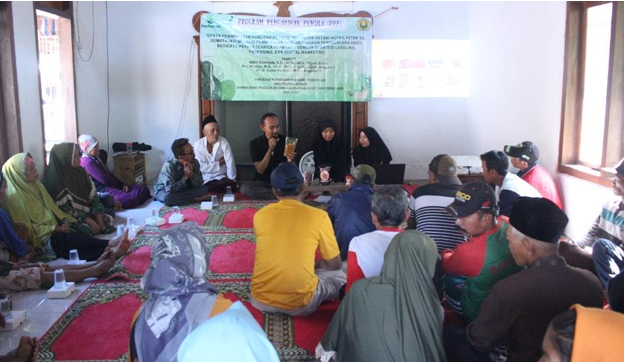

The Forest Farmers Group of Forest Compartment 56 in Sumberjati Village, Silo District, Jember Regency received entrepreneurship training through a community service program titled:
“Efforts to Improve the Economic Quality of the Forest Farmers Group of Forest Compartment 56, Sumberjati through Entrepreneurship Training in Processing Papaya Cultivation Products (Carica papaya L.) with Labeling, Packaging, and Digital Marketing Strategies.”
Located on the southwestern slopes of Mount Raung, Forest Compartment 56 is a remote area inhabited by around 25 households. Most residents depend on gardening, farming, collecting livestock forage, and tapping pine resin for their livelihoods. One of the main commodities widely cultivated by the community is papaya. However, many harvests often go to waste due to spoilage before they can be sold.
Through this community service activity, lecturers and students from the Biology Education Department, Faculty of Teacher Training and Education, University of Jember, provided community empowerment–based solutions. The program began with surveys and discussions with community leaders to better understand the social, economic, and local potential of the residents.
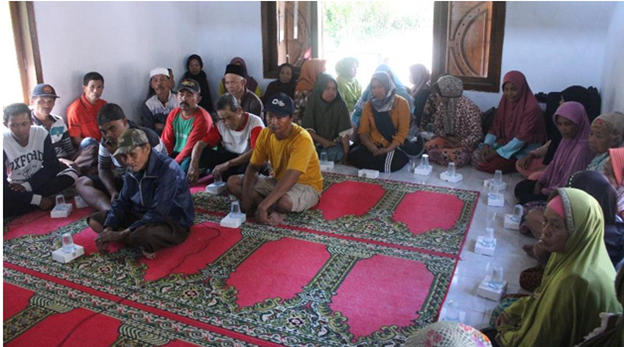
Activity Documentation
From Fresh Papaya to High-Value Product
The residents received training on processing papaya into various creative products, including:
- Candied papaya
- Papaya chips
- Papaya syrup
- Papaya jam
- Papaya sauce
In addition, participants were also equipped with strategies for packaging, labeling, and digital marketing so that their products could compete in broader markets through platforms such as Shopee, Tokopedia, Facebook Marketplace, and TikTok Shop.
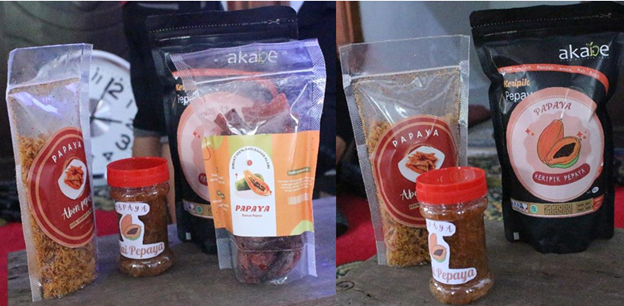
Processed Papaya Products
Attractive Packaging = Increased Product Value
Papaya is often considered a low-value fruit during peak harvest seasons due to oversupply. However, with proper processing innovations and effective marketing strategies, papaya can achieve significantly higher economic value and a longer shelf life. This is the core of community empowerment: transforming local potential into sustainable business opportunities.
💡 Interesting Insights
This activity was not only about producing processed food products, but also about fostering the spirit of economic independence among forest communities. The enthusiasm shown by the residents demonstrated that training programs based on local potential can become a concrete step toward improving community welfare while also reducing post-harvest losses.